Austin homeowners ask about deck installation projects and cost before almost anything else. It’s the right question to ask first, because the answer shapes every decision that follows: material choice, deck size, whether to include a pergola, and when to start. The honest answer is that deck costs in Austin vary more than most homeowners expect, and the variation isn’t random. It follows directly from a set of factors that are entirely predictable once you understand what drives them. This post explains those factors clearly so you can go into your free estimate with a realistic sense of what your project will cost and why.
Material Choice Is the Biggest Single Cost Variable
The surface material you choose has a larger impact on project cost than any other single decision. The range from the most budget-conscious option to the most premium option is substantial, and the right choice depends on more than just the upfront price.
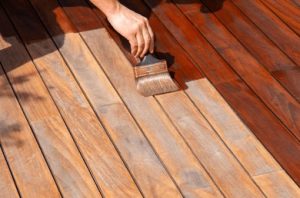
Pressure-treated pine is the least expensive decking material and the most widely installed in Central Texas. It’s a southern yellow pine infused with copper-based preservatives to resist rot, insects, and moisture. The material cost is significantly lower than that of cedar or composite, but it requires regular staining and sealing to maintain its performance and appearance under Central Texas conditions. Homeowners who choose pressure-treated pine and maintain it properly own an excellent deck. Homeowners who choose it based on upfront cost and skip the maintenance end up with a deck that looks its age faster than it should.
A cedar deck surface costs more than pressure-treated pine and brings natural moisture and insect resistance that doesn’t require chemical treatment. Cedar takes semi-transparent stain well and holds color better than pine in Central Texas UV conditions. It’s the material that fits established neighborhoods and natural aesthetic builds in Austin, Cedar Park, and Georgetown, where the visual warmth of real wood is exactly what homeowners want. The maintenance requirement is similar to pine. A deck-staining schedule every two to three years keeps your wood deck performing well through multiple Central Texas seasons.
The composite deck option from brands like Trex, TimberTech, and Fiberon carries a higher upfront material cost than either wood option. The trade-off is a surface that doesn’t need staining or sealing, resists UV fading better than unprotected wood, and carries manufacturer warranties typically in the 25- to 30-year range. In Austin’s HOA communities and for homeowners with limited time for maintenance, composite is consistently the most popular choice we install. The upfront premium typically pays for itself through avoided maintenance costs over the first decade.
Deck Size and Layout Complexity
A simple rectangular deck on a flat lot is the most cost-efficient build. The material cost scales with square footage, and the labor is relatively straightforward. As you add complexity, costs increase, and the relationship between size and cost becomes less linear.
Multi-level designs that step down a sloped lot require more structural engineering, more posts and footings, and significantly more framing labor than a flat-lot build of equivalent total surface area. Austin’s hillside properties in Westlake, Barton Hills, and the Cedar Park corridors are our most complex structural builds, and the design work those sites require reflects that. A multi-level deck on a sloped Westlake lot costs more than a same-size flat deck in Mueller, not because the materials are different,t but because the engineering and labor are.
Wraparound designs, curved edges, built-in seating, and outdoor kitchen rough-ins all increase costs by increasing design time, material waste, and labor hours. They’re worth it when they make the deck more functional and more suited to how the family actually uses the space. They’re worth understanding up front so they’re part of the budget from day one, rather than afterthoughts that expand the scope mid-project.
Terrain and Soil Conditions in Austin
Central Texas terrain creates costs that don’t exist in other regions, and they’re not optional. They’re structural requirements.
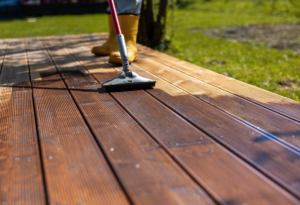
Expansive clay soil affects most of Austin, Cedar Park, Georgetown, and Round Rock. This soil swells with moisture and contracts in drought, and a deck foundation that doesn’t account for that movement will show problems within a few years. We design footings for the specific soil type and moisture conditions at each site, which means Austin area footings typically go deeper and use wider base configurations than the bare minimum the building code requires. That additional foundation work increases the cost and significantly extends the life of the structure.
West Austin properties in Westlake and Barton Hills sit on limestone rather than clay. Limestone is more stable but harder to drill, which affects the equipment and time required to set footings. Hillside drainage planning adds another layer of design work that flat-lot builds elsewhere in Austin don’t require.
The permit offices in Austin, Cedar Park, Georgetown, Round Rock, and Lakeway all have their own timelines and requirements. We coordinate all permitting through our third-party permit partners, and permit costs are included in the project scope and accounted for from day one.
Railing, Stairs, and Feature Additions
The deck surface and structure are the foundation of the cost. Railings, stairs, pergolas, and additional features are meaningful additions to that foundation.
The choice of railing material mirrors the deck surface material in its cost structure. Cable and glass railing costs are higher than those of aluminum baluster systems, which in turn cost more than traditional wood rail. The railing often represents fifteen to twenty-five percent of the total project cost on elevated builds. It’s worth treating railing selection as a real cost decision rather than a finishing detail.
Stairs add structural and material cost that scales with the number of steps and the quality of the treads. Pergola addition costs and the broader scope of outdoor living are both lower when designed as part of the original project rather than added later. We design the full outdoor living scope together when that’s what the homeowner wants, and it consistently yields better results at a lower combined cost than sequential additions.
Getting to an Accurate Number
The only way to get an accurate project cost for your specific deck is a free on-site estimate. Online calculators and general price ranges can help you understand the factors and set expectations. Still, they can’t account for your specific lot’s terrain, your HOA’s material requirements, the soil conditions at your property, or the design that actually fits how you use the space.
At Apex Deck Builders, our free estimates include a site visit, a conversation about how you want to use the space, and a detailed proposal that itemizes materials, labor, and permit coordination: no vague estimates and no surprise charges. If you’re in Austin, Cedar Park, Georgetown, Round Rock, or Lakeway and want to understand what your deck will actually cost, that conversation starts with a free on-site estimate.