Central Texas is hard on outdoor structures. Long summers bake unprotected wood. Spring storms push moisture into every joint and fastener. Expansive clay soil shifts beneath footings. And most decks here go years between inspections. By the time a homeowner notices something wrong, a problem that started as a loose fastener or a soft board has often worked its way into the structure underneath. At Apex Deck Builders, deck repair is not a secondary service. It’s work we take as seriously as a new build, because a poorly repaired deck is as much a liability as one that was never fixed at all.
Book a free inspection, and we’ll come out, walk every inch of your deck, and give you a straight assessment of what it actually needs. No upsell to replacement when repair will do. No minimizing structural issues to keep the job small. An honest read of your deck’s condition and what it will take to make it right.
Request A Free Quote
Not all deck problems announce themselves. The ones that do (a cracked board, a wobbly railing, a stair that shifts underfoot) are usually the visible symptoms of something that started earlier and lower. Our inspection process looks at both.
On the surface, we check for split, warped, or discolored boards; popped or missing fasteners; railings that move when you apply lateral pressure; and stair treads with soft spots or incorrect rise-and-run ratios. Any of these can be safety issues on their own.
Below the surface, we check the ledger board connection to the house, the joist spacing and condition, the beam integrity, and the footings. In Central Texas, expansive clay soil puts unusual stress on deck foundations. Posts shift, footings crack, and framing that was solid five years ago can develop problems that aren’t visible until you’re looking for them.
We also check for moisture infiltration: rot in the framing, mold on the underside of decking boards, and corrosion of hardware from water sitting in fastener holes. Catching these early is the difference between a board replacement job and a structural rebuild.
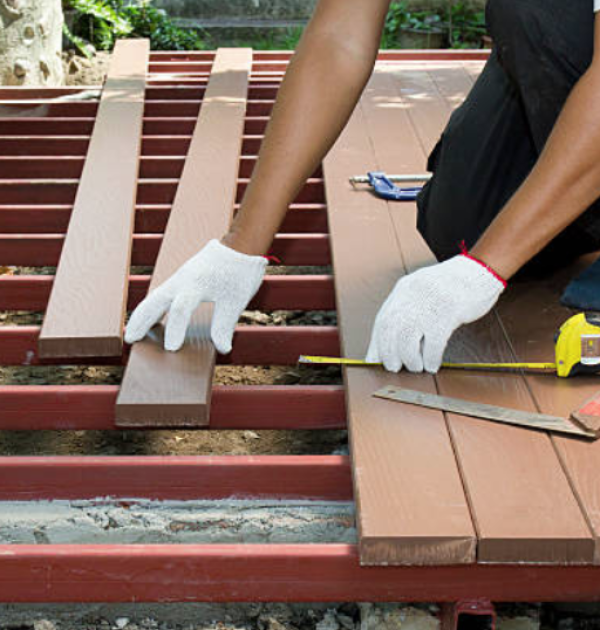
Every repair we do starts with the inspection findings. We don’t have a menu of standard packages, because no two decks are in the same condition. We offer the full scope of what your specific deck needs.
Structural repairs cover joist and beam reinforcement or replacement, ledger board reattachment and flashing, footing repair, and post replacement. These are the jobs that determine whether your deck is safe to stand on. We don’t skip them or defer them because they’re harder to see.
Surface repairs include board-by-board replacement, matching the existing material where possible, composite board swaps using the correct brand and profile, and full deck resurfacing when the surface boards are too far gone for selective repair. When the surface needs attention, and the structure underneath is sound, selective board replacement is almost always the more cost-effective path.
Railing and stair repairs include stabilizing loose railings, replacing cracked balusters and damaged handrails, and rebuilding stair sections that no longer meet code. For older decks, this often means replacing the railing to bring the whole railing system up to current IRC standards, which is worth doing regardless of what else the deck needs.
Fastener and hardware repairs cover corroded or missing screws, bolts, joist hangers, and post bases. This is maintenance-level work that most homeowners overlook until it becomes a bigger problem. Upgrading to stainless or coated hardware during a repair significantly extends the deck’s service life. For composite decks, we also offer a composite decking upgrade for decking boards when the original product is discontinued or when the homeowner wants to improve the surface without replacing the structure.
Water damage and rot repair: moisture is the most common cause of serious deck deterioration in Central Texas. We remove damaged material, dry the affected area, treat it with appropriate preservatives, and rebuild with rot-resistant materials.
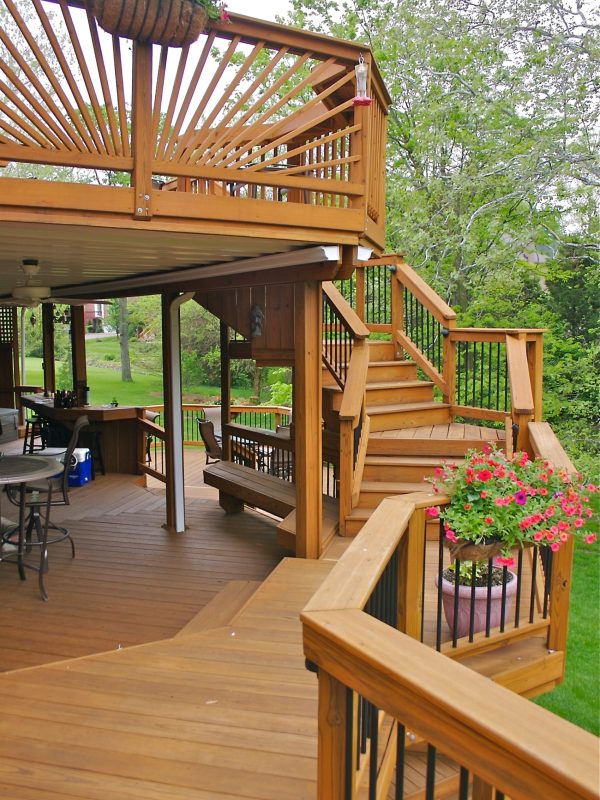
This is the most important conversation we have with homeowners who call about deck repair. The honest answer isn’t always obvious, and we’ve seen it go both ways.
Repair makes more sense when the frame is structurally sound, and the damage is isolated to the surface or specific components. When fixing what’s wrong costs significantly less than starting over, and the existing deck’s layout and design still work for the homeowner’s use of the space. A well-built deck with localized surface damage, a poor ledger connection, or deteriorated railings can often be restored to full functionality and safety at a fraction of the cost of replacement.
Full deck replacement makes more sense when the framing is compromised by rot or pest damage affecting multiple members, when the footings have failed or shifted past the point of repair, when the deck is old enough that repairing the current problems leaves the homeowner with a repaired deck that will need more work within a few years, or when the homeowner’s needs have changed. The existing layout no longer serves them. In that last case, the answer is sometimes a new deck installation or a custom deck rebuild designed around how the space is actually used now.
We tell you which one applies to your deck at the inspection. We’re not motivated to push replacement when repair is sufficient, and we’re not motivated to minimize structural issues to keep the job smaller. You get the honest assessment.
Understanding why decks deteriorate the way they do in Central Texas helps homeowners know what to watch for and when to call.
The summer UV load in Central Texas is intense. Unprotected wood loses moisture and cracks. Surface coatings that aren’t designed for the Texas sun fade and peel within two to three years. Composite products handle UV better than unfinished wood, but even composite boards can show heat warping or color fade if they’re installed without proper gap spacing for expansion.
Spring rains create moisture cycling. Water gets into any gap the UV cracking opened, sits against the wood grain, and accelerates rot. Fastener holes without proper sealing are a particularly common entry point. Metal hardware corrodes. Ledger boards without proper flashing trap water against the house framing, causing the deck structure and the home’s rim joist to rot simultaneously.
The clay soil movement we see throughout Austin, Cedar Park, Georgetown, and Round Rock puts ongoing lateral and vertical stress on deck footings. A footing that was poured at the right depth can still shift over a decade if the soil conditions are extreme enough. Watching for level changes on the deck surface is the easiest way to catch footing movement before it becomes a serious structural problem.
We start with the inspection. We walk your deck at every level, get under it where accessible, check the ledger connection, test the railings, and probe any areas of concern. We document what we find.
From there, a detailed repair plan and quote will be provided. We explain which issues are urgent safety concerns, which are maintenance items that can be addressed now or deferred, and what the repair scope includes. No vague line items and no work that starts before you approve the plan.
Our in-house crew handles repairs. We don’t subcontract. A project manager stays on site throughout, keeps the site clean, and communicates updates at every phase. Most deck repairs are completed within 1 to 3 days, depending on the scope.
When repairs require permits, we handle coordination through our third-party permit partners. Structural repairs to attached decks in Austin, Cedar Park, Georgetown, Round Rock, and Lakeway may trigger permit requirements, depending on the scope of the work. We assess that at the inspection and account for it in the timeline.
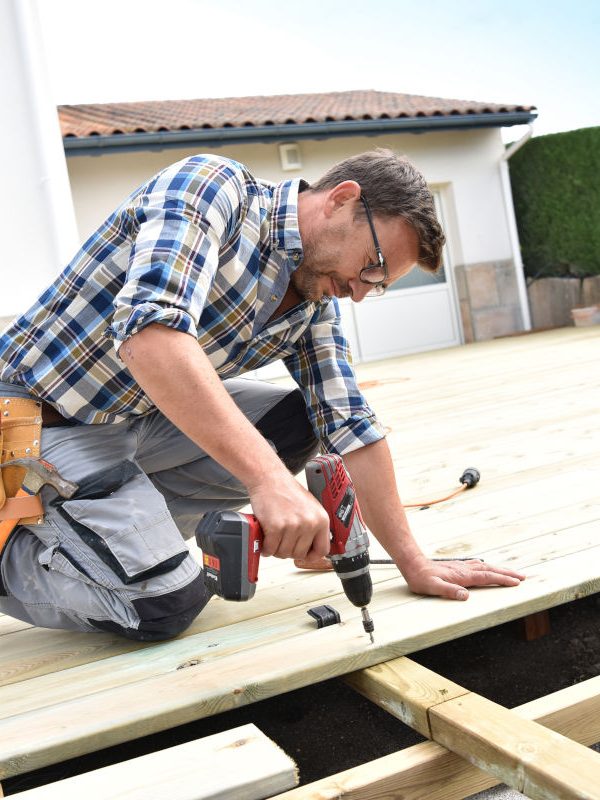
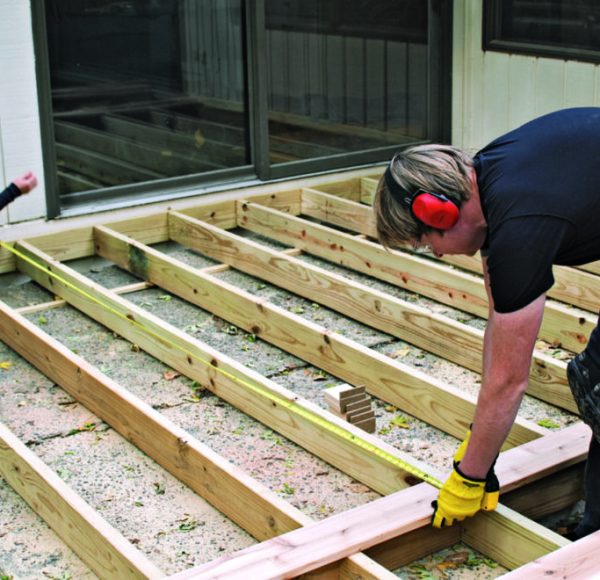
A repaired deck benefits from the same maintenance attention that would have prevented the problems in the first place. After every repair, we give homeowners a specific maintenance checklist for their deck type and material.
For wood decks, that means a staining and sealing service on a schedule that matches the wood species and the deck’s sun exposure. Cedar in full shade needs treatment less often than pressure-treated pine on a south-facing deck. We can handle ongoing maintenance or provide guidance to do it yourself.
Composite decks require less maintenance than wood decks but still benefit from annual cleaning, fastener checks, and drainage inspections. We also recommend checking the gap spacing around the perimeter annually, especially after an unusually wet spring, since clay soil movement can push composite boards out of their intended clearance.
Austin homeowners across South Austin, East Austin, Westlake, Hyde Park, Tarrytown, and every other part of the city call us for repair work. Austin has many older decks in its established neighborhoods, and we do a significant amount of historic-home repair work that requires matching original materials and respecting the architecture.
Cedar Park homeowners in Avery Ranch, Brushy Creek, Lakeline Trails, and Crystal Falls call us regularly for repairs to hillside decks, where drainage and footing issues in sloped terrain are common causes of structural problems.
Georgetown homeowners in Sun City, Georgetown Village, and Wolf Ranch call us for composite deck repairs and board replacements, as well as structural inspections of decks that have weathered several seasons on Williamson County clay soil.
Round Rock homeowners in Teravista, Forest Creek, and Paloma Lake call us for repairs to decks that show clay-soil movement damage or are HOA-flagged for maintenance issues.
Lakeway homeowners in Rough Hollow, Serene Hills, and The Hills of Lakeway call us for repairs to premium composite and wood decks, where humidity from Lake Travis has caused moisture issues faster than expected.
Take a look at our repair portfolio to see the range of repair and restoration work we do throughout Central Texas.
Repair work often opens a broader conversation about the deck and what’s next for the outdoor space. We handle the full range.
When the repair assessment shows replacement is the better call, our full-deck replacement team handles the entire scope from demolition through new construction. When repair is the right answer, but the homeowner also wants to improve the surface or materials, a composite decking upgrade can be incorporated into the repair project. After the deck is solid again, our staining and sealing service extends the life of wood surfaces, and pergola and cover additions or a broader outdoor living renovation can take the repaired deck further than it was before.
The frame is the deciding factor. If the joists, beams, posts, and ledger board are structurally sound, repair almost always makes more sense than replacement. If the framing is compromised by rot, pest damage, or footing failure across multiple members, replacement is usually the more cost-effective long-term answer. We provide that assessment during the free inspection so you can decide with full information.
Most deck repair projects are completed within one to three days. Structural repairs that require permits take longer due to permit timelines, and we account for this in the project schedule from the start.
It depends on the scope. Cosmetic repairs, such as board replacement and hardware upgrades, typically don't require permits. Structural repairs to ledger boards, footings, or framing may require one, depending on the city. Our team assesses this at the inspection and handles permit coordination through our third-party permit partners when required.
In most cases, yes. We source matching wood species and grades for wood decks and work with composite manufacturers to match discontinued profiles where possible. When an exact match isn't available, we discuss the options with you before ordering materials.
Yes. We repair Trex, TimberTech, Fiberon, and other composite brands. Composite deck repairs typically involve board replacement, fastener hardware upgrades, and checking the substructure for moisture issues, since composite decking doesn't rot, but the framing underneath it can.
Soft spots or spongy areas when you walk, railings that move when you push them, visible rot on posts or beams, stair treads that shift underfoot, and any significant level change across the deck surface. These are structural safety concerns that shouldn't wait for a routine inspection schedule.
Every two to three years for a well-maintained deck, and annually for any deck older than ten years or one that's been through a significant storm event. Central Texas weather conditions and clay soil movement make regular inspection more important here than in more stable climates.
Yes. We repair decks regardless of who built them. Our inspection doesn't assume any particular build standard. We assess what's actually there and tell you what it needs.
Apex Deck Builders has been repairing decks across Central Texas since 2010. Veteran-owned, fully insured, and honest about what your deck actually needs. When you’re ready for an inspection, call us or schedule your free estimate to get started.