The railing is what you see. The deck surface is what you stand on, but it’s the railing that shapes how the finished build looks at eye level, defines the character of the outdoor space, and determines whether the view opens up or closes in. A cable rail on a Westlake hillside deck and a painted wood baluster rail on a Hyde Park bungalow are solving the same structural problem: a safe perimeter for an elevated surface. But they read completely differently, and they serve completely different design intentions. At Apex Deck Builders, we install every railing type the Central Texas market calls for: cable rail, glass panel, aluminum balusters, wood, and composite. We’ve been doing it since 2010 across every HOA community and neighborhood in our territory.
Get a railing estimate, and we’ll come out, walk the existing or planned deck, and recommend the railing system that fits the design, the HOA, and how the space is used. We bring samples.
Request A Free Quote
Cable rail is the most requested railing type in our view-oriented markets and is increasingly common across Central Texas HOA communities. Horizontal stainless steel cables span between posts at specified intervals and are tensioned to the required deflection resistance. The result is an unobtrusive sight line: you look through the railing rather than over or past it. Cable rail is the right answer when the yard, the view, or the landscape behind the deck is part of what you’re trying to preserve. In Lakeway, it’s the standard for any deck with a Lake Travis sightline. In Westlake and Barton Hills, hillside decks are popular, where the elevation creates a view worth framing. We install cable rail systems from established manufacturers with appropriate stainless cable grade and post sizing for Central Texas wind and load conditions.
Glass panel rail systems use tempered or laminated glass panels held in aluminum frames or post-mounted channels. They provide a near-invisible perimeter that protects the view even more completely than cable rail, since no horizontal lines are crossing the sight line at all. Glass panels are the highest-end railing option we install, typically specified in Lakeway and Westlake for premium builds where the view is the dominant design consideration. They require periodic cleaning to maintain their transparency and should be specified with an appropriate temperature rating for the span and exposure.
Aluminum balusters with composite or aluminum top and bottom rail are the HOA standard across most master-planned communities in Central Texas. The aluminum balusters don’t rust, don’t need painting or staining, and maintain a consistent appearance over time. Avery Ranch, Teravista, Sun City, and Rough Hollow all accept aluminum baluster rails, and the color options have expanded enough to meet most HOA palette requirements. Composite railing systems from Trex, TimberTech, and Fiberon use their own rail profiles and baluster hardware that integrate with the same manufacturer’s decking material. They’re a natural pairing for composite deck builds where material coordination across the surface and perimeter creates a cohesive finished look.
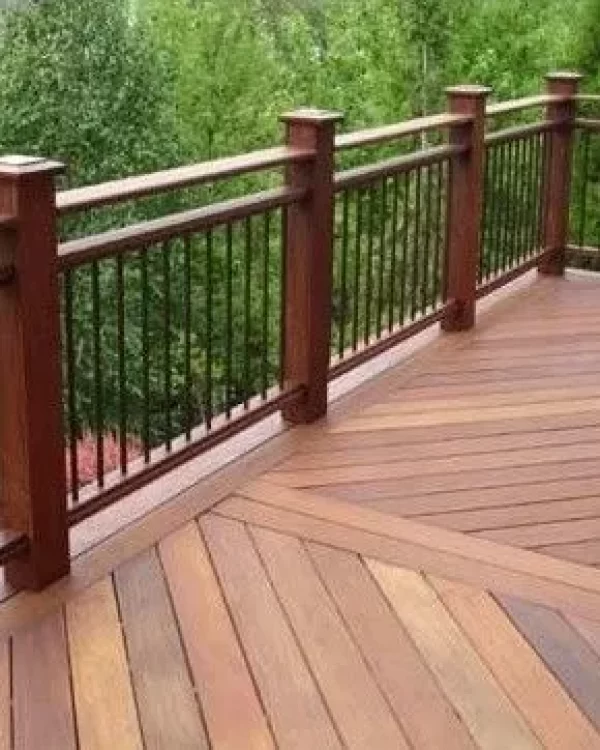
A traditional wood railing with 4×4 posts, a top rail, a bottom rail, and square balusters is the right choice for historic neighborhoods and natural aesthetic builds where the deck needs to look like it belongs to the house. Wood railing profiles in cedar, pressure-treated pine, and painted wood match the architectural character of homes in Hyde Park, Tarrytown, Bouldin Creek, and the established neighborhoods of Cedar Park and Georgetown, where a cable rail system would read as contemporary in the wrong way. Wood railings require the same maintenance as wood deck surfaces: periodic staining and sealing to maintain the finish and protect the timber.
The International Residential Code governs railing installation in Central Texas with local amendments. The key requirements that affect every railing installation we do:
Height requirements: decks 30 inches or more above grade require a guardrail at least 36 inches high. Decks where the walking surface is 30 inches or more above the grade below and accessible to people require 36-inch railings for residential applications. Many jurisdictions in our territory have adopted the 42-inch requirement for elevated decks as an amendment to the base IRC, and we design to those local amendments for every project.
Baluster spacing: openings in a railing system cannot allow a 4-inch sphere to pass through. This is the code basis for the standard baluster spacing and the cable rail spacing requirements. Cable rail systems must have horizontal cable spacing that prevents a 4-inch sphere from passing between cables, which is why the vertical spread of horizontal cable rail is specified in cable count and spacing rather than visual appearance alone.

Top rail graspability: where a top rail also functions as a handrail for a stair, it must be graspable in cross-section, which eliminates flat-top rail profiles for stair sections. We design stair rails to meet graspability requirements, even on systems where the main deck rail uses a flat-top profile.
Post strength and embedment: railing posts must resist a specific lateral load, which affects post size, connection method to the framing, and embedment depth for surface-mounted post bases. We design the post connection to meet the structural requirements for rail height and post spacing for every installation.
The Central Texas market has a specific demand for view-optimized railing that most other regions don’t. Properties in Lakeway, Westlake, Barton Hills, and the hillside corridors of Cedar Park and Georgetown often have meaningful views from elevated decks, and the railing system either preserves or obstructs those views.
The design principle for view-oriented rail is simple: minimize the visual mass at eye level. Cable rail does this better than any other system at its price point. The glass panel does it best of all, at a higher cost. Horizontal rail profiles in aluminum or composite reduce visual obstruction more than vertical balusters because the horizontal lines read with the landscape rather than against it.
Post sizing and placement affect view preservation as much as the infill material. A cable rail system with heavy 4×4 posts at tight spacing obstructs views at the post locations, even though the cable itself is nearly invisible. We design post placement with minimum required spacing for the specific cable system and the view angle from the primary seating and dining positions on the deck.
For pergola railing integration projects where both the pergola and the railing are specified together, the railing post material and profile should coordinate with the pergola post profile. A cable rail with aluminum posts under a cedar pergola reads differently from one with cedar posts under the same pergola. We discuss material coordination in the railing design options conversation so the finished space reads as designed rather than assembled.
Railing system approval is part of the HOA review process in most of the master-planned communities where we build. The most common HOA railing restrictions are height, baluster spacing, post color, and whether cable rail is permitted.
Some communities in Cedar Park and Georgetown specify that railing balusters must be vertical, which eliminates horizontal cable rail in those communities. Others allow cable rail but specify post materials and colors. A few communities in our territory require pre-approval of railing drawings before installation begins, even when the broader deck permit has been approved.
We know the railing requirements for Avery Ranch, Teravista, Sun City, Rough Hollow, Mueller, and Circle C Ranch. We design to those requirements in the first railing drawing, not after a rejection. HOA submittals for railing systems that require them are handled as part of our permit coordination process through our third-party permit partners.
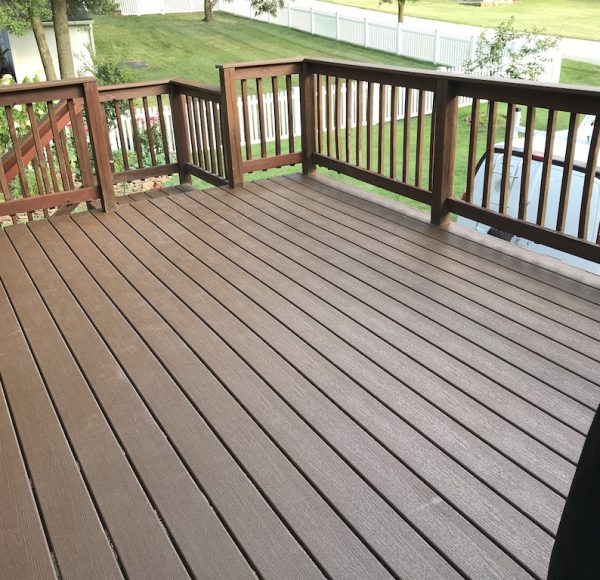
Replacing or upgrading railing on an existing deck is one of our most common standalone services. Homeowners who built with a basic wood rail and want to upgrade to cable rail, or who have an aging aluminum system with corroded hardware, or who are refreshing the deck surface and want the railing to match the updated material.
For railing replacement on an existing deck, we first assess the post connections and framing. A cable rail retrofit requires post connections capable of resisting the cumulative tension load of the cable system. A glass panel system requires post connections and spacing appropriate to the panel weight. An aluminum baluster system is the most straightforward retrofit because the post connection requirements are similar to those of the wood systems used in most existing decks.
When the existing post connections are adequate for the new system, replacement is a straightforward installation. When they’re not, we rebuild the post connections to appropriate strength before installing the new rail system.
Austin railing projects are our most varied market. Cable rail retrofits on hillside decks in Westlake and Barton Hills, historic wood rail replacements on Hyde Park and Tarrytown bungalows, aluminum baluster systems in Mueller and Circle C Ranch HOA communities, and glass panel upgrades on premium South Austin and Travis Heights builds.
Cedar Park railing installations are concentrated in HOA communities where aluminum baluster systems in HOA-approved colors are the standard. Crystal Falls and Brushy Creek hillside decks are increasingly specifying cable rail where HOA guidelines allow.
Georgetown railing builds include substantial Sun City work, where the upgrade from aging wood rail to low-maintenance aluminum or composite rail systems is a consistent demand. Georgetown Village and older, established neighborhoods see cedar-wood rail replacements that match the character of original builds.
Round Rock railing projects primarily feature aluminum baluster systems in Teravista and Forest Creek HOA communities, with cable rail increasingly popular on elevated builds at Paloma Lake and Mayfield Ranches.
Lakeway railing installations are predominantly cable rail and glass panel systems in Rough Hollow and Serene Hills, where the premium build standard and view orientation make anything that obstructs the sight line the wrong answer. The Hills of Lakeway features more traditional wood-and-aluminum systems, where the aesthetic leans toward the community’s established character.
Take a look at our railing portfolio to see the range of railing systems we’ve installed across Central Texas.
Railing connects to the full deck scope. New deck and railing installation projects designed together give the most cohesive structural and aesthetic result. For existing decks with aging rail, our railing repair and inspection service assesses whether repair or full replacement is the better path. When a full deck replacement includes a railing upgrade, our railing upgrade-on-replacement service handles both in a single project scope.
Most jurisdictions in our territory require a minimum 36-inch guardrail for decks 30 inches or more above grade. Several cities in our territory have adopted a 42-inch minimum height as a local amendment for elevated decks. We design according to the specific local requirements for your city at the start of every project.
It depends on the community. Some HOAs in Cedar Park and Georgetown specify vertical balusters only, which eliminates the use of cable rail. Others allow cable rail with specific post material or color requirements. Avery Ranch, Rough Hollow, and most Austin HOA communities allow cable rail. We check the HOA design guidelines before specifying a railing system for any HOA community project.
Yes. Cable rail retrofits on existing decks are a common project for us. The existing post connections and framing need to resist the cumulative tension from the cables. We assess the existing structure before specifying the retrofit and address any connection deficiencies before installation.
Cable rail requires periodic cable retensioning and hardware inspection, typically every three to five years. Glass panel requires cleaning to maintain transparency. Aluminum balusters and composite rail require essentially no maintenance beyond occasional cleaning. Wood rail requires staining and sealing on the same schedule as wood deck surfaces, every 2 to 3 years under Central Texas conditions.
No opening in the railing system can allow a 4-inch sphere to pass through. For balusters, this typically means a maximum spacing of 4 inches. For cable rail, the vertical cable spacing must also prevent a 4-inch sphere from passing horizontally between cables.
Yes. Replacing a standalone railing is a common project. We assess the existing post connections and framing to confirm they're adequate for the new system before installation begins.
New railing installation as part of a deck build is covered under the deck permit. Replacing a standalone railing on an existing permitted deck often does not require a separate permit, though this varies by city. We confirm the permit requirement for your specific project and jurisdiction.
Cable rail is the most requested system in view-oriented markets like Lakeway and Westlake. The aluminum baluster with composite top rail is the most widely installed system overall because it meets HOA requirements in most master-planned communities without requiring specific design committee approval. Wood rail remains strong in historic neighborhoods and natural aesthetic builds.
Apex Deck Builders has been installing deck railings across Central Texas since 2010. Veteran-owned, fully insured, and experienced with every railing system and HOA community in our territory. Call us or schedule your free estimate to get started.