A pergola extends your outdoor season. A patio cover eliminates the weather as a factor entirely. The difference is the roof: a pergola filters sun through an open lattice structure; a patio cover has a solid or solid-panel roof that blocks the sun completely and keeps the rain off. For homeowners who want to use their outdoor space through summer afternoons and spring storm season without limitations, a patio cover is the answer. At Apex Deck Builders, we install solid, insulated, and louvered patio covers across Central Texas and integrate them with deck builds, existing outdoor structures, or as standalone shade improvements.
Get a patio cover estimate, and we’ll come out, assess your existing space or plan the new build, and recommend the cover type that fits your use case, your HOA, and your structure.
Request A Free Quote
The choice between a pergola alternative and a solid patio cover comes down to one question: Do you want filtered shade or complete weather protection?
A pergola gives you overhead definition, partial shade, and the open character of an outdoor structure. It’s more architecturally open, lets in ambient light, and maintains the feeling of being outdoors. In spring and fall, when the weather is mild and the sun is lower, a pergola may be all you need. In Central Texas summers, a pergola still leaves the afternoon sun partially exposed.
A solid patio cover gives you complete sun and rain protection. In July and August, when a Central Texas afternoon peaks over 100 degrees, full shade changes how usable the space is. When spring thunderstorms roll through in April and May, a patio cover keeps the outdoor furniture and the space itself dry and ready. For homeowners who want their covered outdoor space to function as a true outdoor room regardless of weather, a solid cover is the more functional choice.
Louvered covers offer the best of both: adjustable panels that open for winter sun and close for summer shade and rain protection. They carry a higher cost than fixed solid covers but provide the most flexibility across Central Texas’s varied seasonal conditions.
Solid insulated patio covers are aluminum panel systems with insulation sandwiched between the inner and outer panels. They’re the most common cover type in our market because they do more than just block sunlight: the insulation layer significantly reduces the radiant heat transfer from the roof panel to the space below. A non-insulated aluminum or metal panel in direct Central Texas sun acts as a radiant heater overhead; an insulated panel keeps the covered space substantially cooler. We specify insulated panels over non-insulated panels for any cover that will be in direct sun exposure, which in Central Texas is almost every cover we install.
Solid wood and timber patio covers provide a more traditional architectural look that better matches many established Central Texas homes than aluminum panel systems. Cedar, rough-sawn cedar, and painted pine frames with solid tongue-and-groove decking overhead create a covered space that reads as an extension of the house rather than a product attached to it. Wood covers require staining and sealing maintenance similar to wood deck surfaces, and we treat every wood cover the same way we treat the deck surface below it.
Aluminum flat-panel and corrugated metal patio covers are budget-conscious options for homeowners who need full rain protection at lower material costs. We install them where budget is the primary driver and the aesthetic requirements are flexible.
Louvered patio covers with motorized or manually adjustable panels represent the premium category. The adjustable louvers open and close to control light and ventilation in the covered space. In winter, fully open louvers let the Central Texas sun warm the space naturally. In summer, closed louvers block direct sunlight and can be pitched to redirect rain. For homeowners who use the covered outdoor space year-round and want maximum control over conditions, louvered systems are the most functional investment.
Adding a solid patio cover to an existing deck requires a structural assessment before any cover can be specified or installed.
The existing deck framing and post placement may not be adequate to support the additional dead load of a solid cover system. We assess the existing structure, determine whether the current posts can carry the cover load or require new posts and footings, and design the structural support system accordingly. A patio cover that is not properly supported will show movement and structural problems faster in Central Texas’s wind and storm conditions than in a more moderate climate.
For deck and cover installation projects where the deck and cover are designed together from the start, structural planning is straightforward because post sizing and footing capacity are determined by the combined load from the outset. This is always the cleaner approach when both are being built simultaneously.
Patio covers are subject to HOA review in most of the master-planned communities where we build. The height, materials, color, and overall dimensions of the cover structure are the most common specification points.
In communities like Avery Ranch, Teravista, and Sun City, cover materials and appearance have to align with the community’s design standards. Aluminum cover systems in HOA-approved color ranges are a common solution. Cedar wood covers with appropriate finish colors are another option. We know the requirements for each community and design to them before any submittal goes in.
For homeowners outside HOA communities, the permit process still applies. Most patio cover structures require a permit, and because they are attached to the house, the permit drawings must show the ledger connection and the load path to the ground. Our team coordinates all permitting through our third-party permit partners.
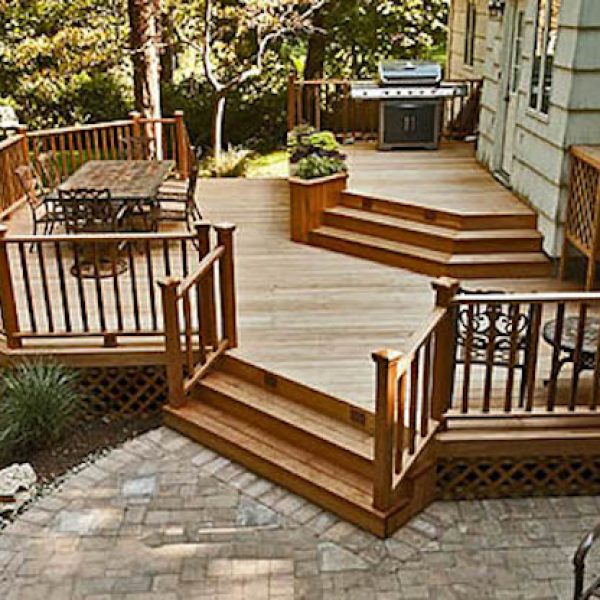
A patio cover is most effective when it’s designed as part of the outdoor living space rather than added to an existing deck as a standalone afterthought. The cover’s position determines where furniture and outdoor kitchen equipment can be placed, where lighting fixtures go, and how the covered area transitions to the uncovered deck space.
Covered deck design from the start means the cover’s structural posts are positioned to maximize the covered footprint. The composite deck below the cover can be a different material from the uncovered deck section when the two areas are designed together. Fan and lighting connections can be rough-in as part of the structural build rather than added afterward. The railing-and-cover combination that defines the perimeter of the covered space reads as a cohesive unit rather than as separate additions.
For homeowners who want to build a full outdoor living space with cover that includes kitchen equipment, dedicated seating areas, and outdoor entertainment features, the covered structure is the organizing element around which everything else is planned.
Austin patio cover projects are most active in South Austin, where the combination of smaller lots and outdoor-focused lifestyles creates strong demand for structures that make the outdoor space fully usable through summer. Westlake and Barton Hills hillside builds often incorporate patio covers over the primary entertaining level of multi-level decks.
Cedar Park patio cover builds are frequently insulated aluminum cover systems in HOA communities, where the cover material and color must meet design standards. Avery Ranch is an active market for covered outdoor structures that align with the community’s newer-construction aesthetic.
Georgetown patio cover projects include Sun City work, where insulated aluminum cover systems provide the low-maintenance, year-round covered outdoor space that active 55+ homeowners use regularly. Georgetown Village and Wolf Ranch also have active demand for covered structures.
Round Rock patio cover builds are most common in Teravista and Paloma Lake, where homeowners have the lot size and entertainment focus to make a full covered outdoor living space a practical investment.
Lakeway patio cover projects in Rough Hollow and Serene Hills frequently involve view-conscious cover designs that provide overhead protection without closing the Lake Travis sightlines. Insulated covers with minimal fascia depth and strategic post placement preserve the views that make Lakeway properties valuable.
Take a look at our patio cover portfolio to see the range of cover installations we’ve done throughout Central Texas.
Patio cover installation connects to the full outdoor scope. When staining the patio cover, the wood structure is part of the project, and we include it in the same service as the deck surface treatment. For new builds that combine a deck and a cover, installing them as a single project is the most efficient and structurally sound approach. For full outdoor living with cover projects that bring the entire outdoor space together, we design and build the deck, cover, railing, and features as a single integrated project.
A patio cover has a solid or solid-panel roof that blocks sun and rain completely. A pergola has an open lattice or slatted roof that filters the sun without eliminating it. Pergolas are more architecturally open; patio covers provide full weather protection. Which is right depends on how much weather protection you want and how you use the outdoor space.
Yes. Patio cover structures, particularly attached structures, require permits in Austin, Cedar Park, Georgetown, Round Rock, and Lakeway. The permit drawings need to show the attachment to the house structure and the load path to the ground. We coordinate all permitting through our third-party permit partners.
Insulated patio covers have a foam or reflective insulation layer sandwiched between the outer and inner panels. This significantly reduces the radiant heat transfer from the roof to the space below, keeping the covered area substantially cooler in Central Texas summer conditions. We specify insulated covers for any full-sun installation because the temperature difference is meaningful.
Yes, but the existing structure needs assessment first. We evaluate whether the current posts and footings can carry the additional cover load or whether new structural support is needed. The cleanest result comes from designing the deck and cover together from the start.
Most standalone patio cover installations are completed within three to seven days, depending on cover type and size. Combined deck and cover projects take longer and are scheduled as integrated builds.
Yes. Louvered patio cover systems with adjustable panels are a growing category in Central Texas. They allow homeowners to open for winter sun and close for summer shade and rain protection. They carry a higher cost than fixed solid covers but provide maximum seasonal flexibility.
In most communities we work in, yes, within specific design parameters. Color, material, height, and dimensions are the most common HOA specification points for cover structures. We design to those parameters and handle all HOA submittal documentation.
Yes. Ceiling fan and lighting rough-ins are standard parts of every patio cover installation we do. We coordinate with an electrician for final connection, but we position and install the blocking, conduit, and junction boxes in the cover structure as part of the build.
A properly built patio cover extends your outdoor living season through the hottest and wettest months Central Texas throws at a backyard. Apex Deck Builders has been installing patio covers across Central Texas since 2010. Veteran-owned, fully insured, and built to last in this specific climate. Call us or schedule your free estimate to get started.