All three of the major composite decking brands perform well in Central Texas conditions. Trex, TimberTech, and Fiberon are all capped composite products, and all three hold up better than unprotected wood in Central Texas UV and humidity cycles. The decision between them is real but narrower than most homeowners expect when they start researching. This post breaks down what each brand actually brings, where each one fits in the Central Texas market, and how to make the call for your specific project. The full product line specs are on our composite installation page.
What All Three Have in Common
Before the comparison, the shared foundation: capped composite decking has a wood fiber or PVC core wrapped in a protective polymer cap layer. That cap layer is what makes composite perform differently from wood in Central Texas conditions. It resists the UV that bleaches and dries unprotected wood. It resists the moisture cycling that opens wood grain and accelerates rot. And it eliminates the staining and sealing schedule that wood requires every two to three years in this climate.
For HOA communities, the cap layer is what allows the composite to maintain consistent color and appearance across the entire neighborhood, regardless of individual homeowners’ maintenance schedules. That consistency is a significant part of why Avery Ranch, Teravista, Sun City, and Rough Hollow have largely shifted to composite as their community standard.
All three brands have individual product lines within their catalog. Each brand has a premium tier and a value tier, and the performance difference between tiers within a brand is often larger than the difference between comparable tiers across brands.
Trex: The Market Standard
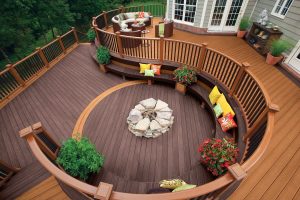
Trex is the most recognized composite brand in the country and the one that achieves the broadest acceptance in HOA communities across Central Texas. When HOA design guidelines reference composite decking without specifying a brand, Trex is almost always acceptable. When a community wants to specify a brand by name, Trex is the name they’re most likely to specify.
The Trex product line has two primary residential tiers: Transcend and Select. Transcend uses a full four-sided cap that wraps the board completely, including the underside. This full-wrap cap provides the strongest resistance to moisture infiltration and UV rays from all angles. For decks in full afternoon sun, which is common on south-facing Austin lots, Transcend’s color retention over time is notably better than that of products with a three-sided cap.
Trex Select uses a three-sided cap, leaving the underside uncapped. The performance difference is meaningful on decks where the underside is exposed to standing moisture. For most standard deck installations where the underside has adequate ventilation and drainage, Select performs acceptably at a lower cost than Transcend.
The Central Texas market sees a lot of Trex because homeowners and HOA design committees recognize the brand, and the approval process for Trex submissions is often straightforward. On our composite installation page, we carry both Trex tiers and bring samples to every consultation.
TimberTech: The Wood-Look Premium Option
TimberTech is the brand we recommend most often when homeowners want composite performance but are reluctant to give up the texture and grain of real wood. The TimberTech lineup, particularly the Azek line, does the best job of any composite product in our market of replicating the visual character of real wood grain.
The key distinction within TimberTech is core construction. TimberTech Azek uses a PVC core rather than the wood-fiber composite core used by Trex and most other products. The PVC core makes Azek completely impervious to moisture because there’s no wood fiber to absorb water. In Lakeway’s lake-humidity environment, where moisture cycling from the lake affects outdoor structures more quickly than in inland markets, Azek’s core construction is a meaningful advantage.
TimberTech PRO uses a composite core similar to Trex, with a high-quality cap layer and a strong wood-grain texture. It positions as a step down from Azek in moisture performance but a step up from the value tier in aesthetics. Wide-plank profiles available in the PRO lineup are popular on premium builds in Westlake and Lakeway, where the broader board surface creates a more substantial visual impression.
The honest tradeoff with TimberTech Azek: it costs more than Trex Transcend, and the PVC core behaves slightly differently in extreme temperature swings. In Central Texas summers, PVC core composite expands more than wood fiber composite, which means gap spacing at installation needs to account for that expansion. We install according to the manufacturer’s specifications for the conditions, not to a standard gap that works for wood.
Fiberon: The Value-Tier Performer
Fiberon is the brand we specify when the budget is a real constraint, and the homeowner still wants capped-composite performance rather than pressure-treated pine. The Fiberon Horizon and Symmetry lines deliver solid fade and stain resistance at a lower material cost than comparable Trex or TimberTech tiers.
Fiberon’s HOA acceptance is broader now than it was five years ago. Most communities that accept composite by material type rather than specifying a brand will approve Fiberon without issue. For communities that specify Trex by name, Fiberon won’t qualify.
The honest position on Fiberon: it’s a genuine composite product that performs as advertised. It isn’t a premium product, and it doesn’t present like one. The color range is narrower than Trex or TimberTech, the texture profiles are simpler, and the long-term fade resistance is adequate rather than exceptional for high-UV exposure. For a homeowner whose primary goal is to get off the wood maintenance schedule at a reasonable cost, Fiberon is a sound choice.
How Central Texas Conditions Shape the Decision
Two Central Texas factors most influence which brand is best for a specific project: UV exposure and HOA requirements.
UV exposure is the biggest performance differentiator in this climate. A deck in full afternoon sun in Austin or Cedar Park is exposed to UV levels that stress composite cap layers more aggressively than in moderate climates. The better the cap layer formulation, the more color retention you’ll see at the five- and ten-year marks. Trex Transcend and TimberTech Azek lead on this measure. Trex Select and Fiberon are adequate; they won’t look as good at ten years as the premium products under the same UV exposure.
Board color also affects surface temperature in a Central Texas summer. All composite products absorb more heat than wood in direct sunlight. Darker colors absorb more than lighter ones. We discuss color selection during the composite design consultation, specifically regarding sun exposure and surface temperature, because a dark board on a south-facing deck in Austin can be uncomfortably hot underfoot in July, regardless of the brand.
Note on maintenance: composite boards themselves don’t need staining. But the wood framing, railings, and any pergola posts on a composite deck still need regular maintenance, which our composite deck staining note service covers separately.
Where Each Brand Works Best in Central Texas
Central Texas composite builds across Austin see all three brands, with Trex dominant in the HOA markets and TimberTech popular on premium hillside builds. Avery Ranch composite projects in Cedar Park are primarily Trex because the community’s HOA design committee is familiar with the brand, and the approval process is well established.
Sun City composite decks in Georgetown favor Trex and TimberTech PRO for their low-maintenance profile and HOA acceptance. Teravista composite builds in Round Rock are similar, with Trex the dominant brand in the community’s approval history.
Rough Hollow composite decks in Lakeway see the highest concentration of TimberTech Azek in our territory, where the PVC core’s moisture resistance and the premium wide-plank profiles align with the community’s build standards.
For composite cable rail pairing, the railing system brand should coordinate with the decking brand for color and profile consistency. Trex, TimberTech, and Fiberon all have matching rail systems, and we design the full surface and perimeter as a coordinated package on every composite build.
Making the Call
If you’re in an HOA community and want the clearest approval path, choose Trex Transcend or Select. If you want the most realistic wood appearance in a composite product, TimberTech Azek. If budget is the primary constraint and a branded composite look isn’t required: Fiberon.
For most Central Texas HOA builds where appearance and low maintenance are both requirements, Trex Transcend is the most common final choice because it handles UV conditions here better than entry-tier options and passes HOA review more reliably than brands the committee hasn’t seen before.
Get a free composite quote , and we’ll bring samples from all three brands to your property so the color and texture decision is made in context, against your house and landscape, rather than off a website swatch.