
This is the single most common decision homeowners face before wood deck installation details or composite installation details even enter the conversation. Both materials build excellent decks in Central Texas. Neither is wrong. But they perform differently in this specific climate, cost differently over the deck’s life, and fit differently into HOA communities. Most homeowners benefit from seeing the full comparison laid out plainly rather than getting a quick recommendation over the phone.
Upfront Cost vs Lifetime Cost
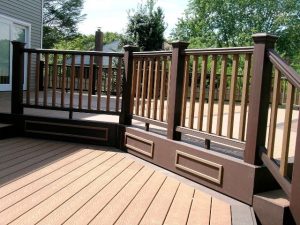
Pressure-treated pine is the least expensive decking material available, and cedar costs more than pine while still landing below most composite products at the material level. Composite has the highest upfront material cost among the common options, particularly in the premium tier.
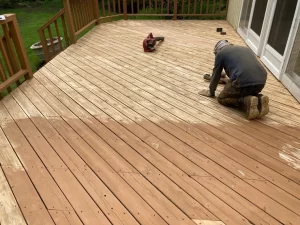
The number that actually matters is lifetime cost, not the price per board foot at installation. A wood deck requires staining and sealing every two to three years in Central Texas conditions to maintain its protective finish. Each of those maintenance cycles has a real cost in materials and labor if hired out, or in time if done by the homeowner. Over fifteen or twenty years, those cycles add up. Composite has no comparable recurring cost. The boards don’t need refinishing.
Whether wood or composite wins on lifetime cost depends on how long you plan to own the home and how diligently the wood deck gets maintained. A homeowner who stays in the home for five years and then sells will likely come out ahead because of wood’s lower upfront cost. A homeowner who plans to stay for fifteen or twenty years and wants to avoid the maintenance commitment usually comes out ahead with composite, even with its higher starting price.
Maintenance Reality in Central Texas Conditions
This is where the climate matters more than it does in most parts of the country. Central Texas combines high UV exposure with humidity cycles that swing from wet spring to dry summer, and both factors accelerate the deterioration of unprotected wood here more than in a moderate climate.
A properly maintained wood deck, with ongoing staining on schedule, performs well and ages with real character. A wood deck that falls behind on that schedule deteriorates noticeably faster in Central Texas than it would in a cooler, less UV-intense region. The maintenance commitment for wood here isn’t optional as it might be elsewhere. It’s the difference between a deck that lasts thirty years and one that needs significant repair and assessment within ten years.
Composite removes that variable entirely. The boards are manufactured with UV-resistant caps that don’t require refinishing and don’t absorb moisture that drives wood deterioration. Annual cleaning is the extent of composite maintenance for most homeowners.
Appearance and Feel
Real wood has a texture, grain pattern, and aging character that composites have gotten closer to replicating but haven’t fully matched. Homeowners who specifically want the look and feel of natural wood, particularly in established neighborhoods or in homes with a traditional architectural character, often find that the appearance of composites, while much improved over earlier generations of the product, still reads as slightly different in person.
Composite offers consistency that wood can’t. Every board looks the same, the color doesn’t vary with stain application quality or weathering rate, and the surface stays uniform across the entire deck for the life of the product. For homeowners who want a clean, predictable, low-variation appearance, that consistency is an advantage rather than a tradeoff. The texture underfoot differs, too. Wood has a slight natural give and a warmth to the touch that many homeowners specifically associate with a traditional deck experience. At the same time, composite tends to feel more uniform and, depending on color, can run hotter in direct summer sun.
HOA Community Fit
This factor often settles the decision before the homeowner gets to weigh cost or appearance. Many Central Texas HOA communities have moved toward favoring or specifying composite materials because they maintain a consistent appearance across the neighborhood without relying on individual homeowners to stay current with staining schedules.
Cedar Park material standards and Georgetown HOA material rules in communities like Avery Ranch and Sun City increasingly favor composite materials for this reason. Homeowners in these communities should check their specific HOA design guidelines before committing to a material, since some communities restrict wood options or require specific composite brands.
Established, non-HOA neighborhoods in Austin and older sections of Cedar Park and Georgetown have far more flexibility, and wood remains a strong, often preferred choice in these markets.
Making the Decision for Your Project
The right material depends on three honest questions: how long you’ll own the home, how much ongoing maintenance you’re willing to commit to, and what your HOA allows. There’s no universally correct answer, which is why we treat this as a real conversation rather than a default recommendation.
Every deck design and material selection consultation we do includes bringing samples of both wood and composite products so you can see and feel the difference in person, against your actual house and yard, rather than deciding a brochure.
Schedule a material consultation, and we’ll walk through the tradeoffs for your specific situation, your HOA, and your long-term plans for the property.
Where We Build Both Materials in Central Texas
Austin wood and composite builds cover the full range of the city’s neighborhoods, from historic-character wood builds in established areas to composite installations in newer HOA communities. The right material often becomes clear once we’ve walked the specific property and talked through the homeowner’s plans.