
Homeowners considering deck design options often start with a simple question: Will this actually pay off? The honest answer has two parts. A well-built deck does add measurable resale value in most Central Texas markets, and it adds something harder to quantify but arguably more important for most homeowners: years of daily use and enjoyment of a backyard that would otherwise sit unused for much of the year.
The Resale Value Numbers
National industry data consistently shows that deck additions return a substantial portion of their construction cost at resale, typically in the range that puts decks among the better-performing home improvement projects for return on investment. Central Texas’s strong outdoor living culture, combined with a climate that supports outdoor use for most of the year, tends to make decks particularly appealing to buyers in this region compared to markets with shorter outdoor seasons.
The specific return varies based on deck quality, material choice, and how well the addition integrates with the rest of the home and yard. A well-designed deck that looks like a natural extension of the house typically performs better than one that reads as an afterthought, regardless of the materials used.
What Actually Drives the Value
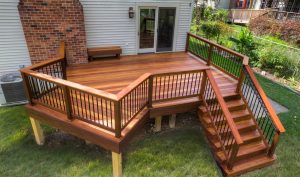
Not all decks add the same value, and several factors consistently separate decks that perform well at resale from those that add little.
Quality of construction matters more than almost any other factor. A deck with proper footings, correct flashing at the ledger board, and solid framing holds up to inspection and continues looking good for years, which is exactly what a buyer wants to see. A deck with visible wear, structural issues, or obvious shortcuts becomes a liability rather than an asset during a sale.
Material choice affects both upfront cost and perceived value. Composite decking for resale appeal has become increasingly attractive to buyers, specifically because it signals low future maintenance, which matters to buyers who don’t want to inherit a staining schedule along with the house.
Integration with the home’s overall design and the yard’s layout affects how much the deck reads as a valuable feature versus a disconnected addition. A deck that flows naturally from an interior living space and makes good use of the yard tends to be perceived as more valuable than one that feels isolated or awkwardly placed.
Scale relative to the home matters too. A deck that’s proportional to the house and yard reads as an asset. One that’s dramatically oversized or undersized for the property can actually work against the home’s overall appeal.
The Value Beyond Resale
For most homeowners, resale value isn’t actually the primary reason to build a deck, even though it’s often the first question asked. The real return is in how the space gets used while you own the home.
A well-designed deck extends usable living space without the cost of a full home addition. In Central Texas, where the climate supports outdoor living for most of the year, that extended space is used constantly: morning coffee, weekend meals, evening relaxation, and entertaining that would otherwise happen entirely indoors or not at all.
Outdoor living space planning that goes beyond just a deck surface, incorporating shade structures, seating areas, and sometimes outdoor kitchens, multiplies this value further. Homeowners who invest in a complete outdoor living space often describe it as the part of the house they use most, which is a meaningful return even before any resale calculation comes into play.
How Long-Term Ownership Changes the Calculation
Homeowners planning to stay in their home for many years should weigh lifestyle value more heavily than resale projections, since they’ll capture years of daily use regardless of market conditions. Homeowners planning a shorter ownership horizon should pay closer attention to materials and design choices known to perform well at resale.
Either way, deck staining for long-term value and ongoing maintenance protects whatever investment is made. A neglected deck, regardless of how well it was originally built, loses both lifestyle value and resale value as it deteriorates. The maintenance commitment is part of the investment, not separate from it.
Making the Investment Decision
The most useful framing isn’t “will this deck pay for itself” in isolation, but rather “what’s the total value, resale plus years of use, relative to the cost.” For most Central Texas homeowners, that combined calculation favors building, particularly when the deck installation process is handled by a team that builds to last rather than to a minimum standard.
Schedule a project consultation, and we’ll walk through what a deck would look like on your specific property, what it would likely cost, and how that compares to both resale data and the years of use you’d get from it.
Regional Considerations Across Central Texas
Austin homes and outdoor living go hand in hand in this market, where buyers actively seek and value well-designed outdoor spaces as part of their home search. Lakeway-view properties see some of the strongest deck-value returns in our service area, where a well-placed deck that takes advantage of Lake Travis views can meaningfully differentiate a home in that market.