Yes, and deck staining in Central Texas requires a different approach than it does in a more moderate climate. Central Texas summers create two application problems that don’t exist in the same way elsewhere: surface temperatures that far exceed air temperatures in direct sun, and rapid moisture evaporation that shortens the open time for stain to penetrate the wood grain before it sets. A stain applied correctly to a properly prepared deck in moderate October weather will outlast the same product applied at noon in July on a surface that’s 20 degrees hotter than the surrounding air. Understanding how those conditions affect the stain application and how to work around them is the difference between a finish that lasts two to three years and one that starts failing within a season.
What High Heat Does to Stain Application
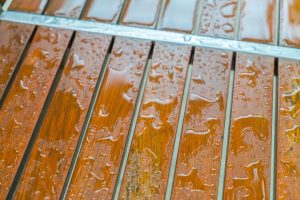
Stain needs time in contact with open wood grain to penetrate and bond with the wood fiber. That process requires the product to stay wet and workable for long enough to soak in. At moderate temperatures of 50 to 85 degrees, most quality stains have a generous open time, allowing you to work in larger sections without lap marks or dry edges.
When you’re applying stain to a deck surface in Central Texas in the summer, with direct sun at temperatures that commonly reach 100 degrees or more, the open time shortens dramatically. The stain can start to set before it’s had time to penetrate. The result is a surface film that sits on top of the wood rather than in it, making it more vulnerable to peeling and less protective against moisture penetration than a properly penetrated coat.
The problem compounds if the stain is applied in sections that are too large. As the earlier section starts to set and you’re still working on the adjacent boards, the transition zone between the two sections dries faster than the rest of the surface. That’s where lap marks appear.
Timing Is the Primary Solution
The most effective way to stain a Central Texas deck in warm weather is to work during the hours when both the surface and air temperatures are within the product’s acceptable range. Most quality stain manufacturers specify an application range of 50 to 85 or 90 degrees. That range exists in Central Texas in summer, but only in the early morning.
We schedule staining projects to begin at or before sunrise when surface temperatures are at their lowest for the day. An east-facing deck gets direct morning sun and becomes unusable for staining earlier than a west-facing deck shaded from the morning sun. We assess the deck’s orientation and shade coverage before scheduling a start time.
The goal is to be finished, or as close to finished as possible, before the surface temperature exceeds the product’s application threshold, which, on a summer day in Austin, typically occurs before ten in the morning on a sun-exposed deck. On partially shaded decks or north-facing surfaces, the usable window is longer.
Late evening is a secondary option. As the day cools and the sun angle drops, surface temperatures fall back into the application range. The evening window is shorter than the morning window in most cases because dew point and overnight moisture can affect a freshly applied stain that hasn’t fully penetrated before the air moisture level rises.
Prep Work That Makes the Difference
Stain applied to a poorly prepped surface fails faster, regardless of the application temperature. Central Texas conditions make surface prep more important, not less, because the stress the finish will be under is higher here than in moderate climates.
The deck needs to be free of mold, mildew, dirt, and any previous stains that have failed or lifted. We handle deck repair before staining when the surface has soft spots or other damage that should be fixed before any new finish is applied. Then we pressure-wash and apply a brightener to restore the wood’s pH balance. Pressure-treated pine and cedar respond differently to washing and brightening, so we adjust our approach based on the material.
Moisture content is the critical variable after washing. Stain applied to wood that still carries significant moisture from washing doesn’t penetrate as effectively as stain applied to properly dried wood. We allow adequate drying time after washing before applying any product. In Central Texas summer conditions, where morning humidity is often higher than midday, that timing matters more than it would in a dry climate.
We also check for areas of existing stain failure that need to be addressed before the new coat goes on. A fresh stain coat over a failing previous coat produces a failing coat faster than starting clean. On decks with partial stain failure, we spot-strip or feather the transition rather than staining over the problem.
Product Selection for Central Texas Conditions
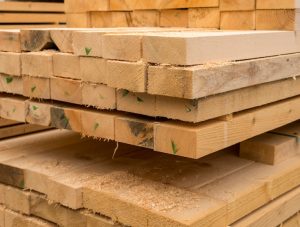
Not all stains perform equally well in high-heat, high-UV applications. For Central Texas decks, the right wood deck installation and prep before staining matters as much as product selection. Oil-based semi-transparent and oil-hybrid products generally offer better heat tolerance and penetration than thin water-based products. They stay wet and workable slightly longer during application and penetrate the wood grain more effectively at warmer temperatures.
Solid stains show application errors more clearly than semi-transparent products. They are harder to apply evenly in warm weather because the thicker formulation has less tolerance for timing variation between sections. For decks with significant weathering or color variation that a semi-transparent stain won’t adequately address, a solid stain is sometimes the right choice. Still, the summer application window is more restricted.
The most important product characteristic for Central Texas applications is UV resistance. The UV index here runs high for most of the year, and the UV-absorbing components in the stain formulation are what keep the finish viable between applications. A product with weak UV resistance in a moderate climate will fail quickly here.
When to Call a Professional for Staining
The window for quality stain application in Central Texas summer is short, and the prep requirements are specific. Most homeowners attempting summer staining for the first time either start too late in the day or don’t allow enough drying time after washing, and both errors cause the job to fail faster than professional work.
We schedule our staining projects around weather windows and start early. Our crews have the equipment to prep and stain efficiently within the morning application window. For decks with pergola shade for staining overhead coverage, the application window is longer because the surface temperature stays lower, which is how we deliver results that last two to three years rather than the one-to two-year results a poor summer application produces.
If you’re considering staining your own deck in the summer, the most valuable advice is this: if the surface feels warm to the touch, it’s too hot to stain. A patio cover and staining combination changes this dynamic by keeping the deck surface in shade. Wait until the surface itself is in the right temperature range, not just the air around it.
Fall Is the Best Season for Central Texas Deck Staining
If timing is flexible, October and November are the best months for deck staining in Central Texas. Temperatures are consistently in the ideal range, UV intensity drops, and morning dew doesn’t appear as early in the evening as it does in summer. The longer application window in the fall allows for more careful work and more consistent results than the compressed summer morning window.
We plan our staining schedule around Austin staining projects and all of our service areas, taking into account their timing needs and the weather calendar. For homeowners who can schedule in the fall, we recommend it.
For homeowners who need the deck stained in summer, we schedule around the conditions and deliver results that hold up through the season. Cedar Park deck staining and other HOA community maintenance work are often scheduled in the fall to coincide with better conditions and off-peak demand.
Schedule a professional staining estimate, and we’ll assess your deck’s surface and recommend the right timing and product for your specific exposure.